// 2026-05-17 · Maps & Exploration · by Bob Smith
Atlas Obscura: A Map of the World's Strangest Places
Atlas Obscura is a crowd-built guide to hidden wonders, bone chapels, abandoned rockets, weird foods and secret gardens, mapped, searchable and free to browse.
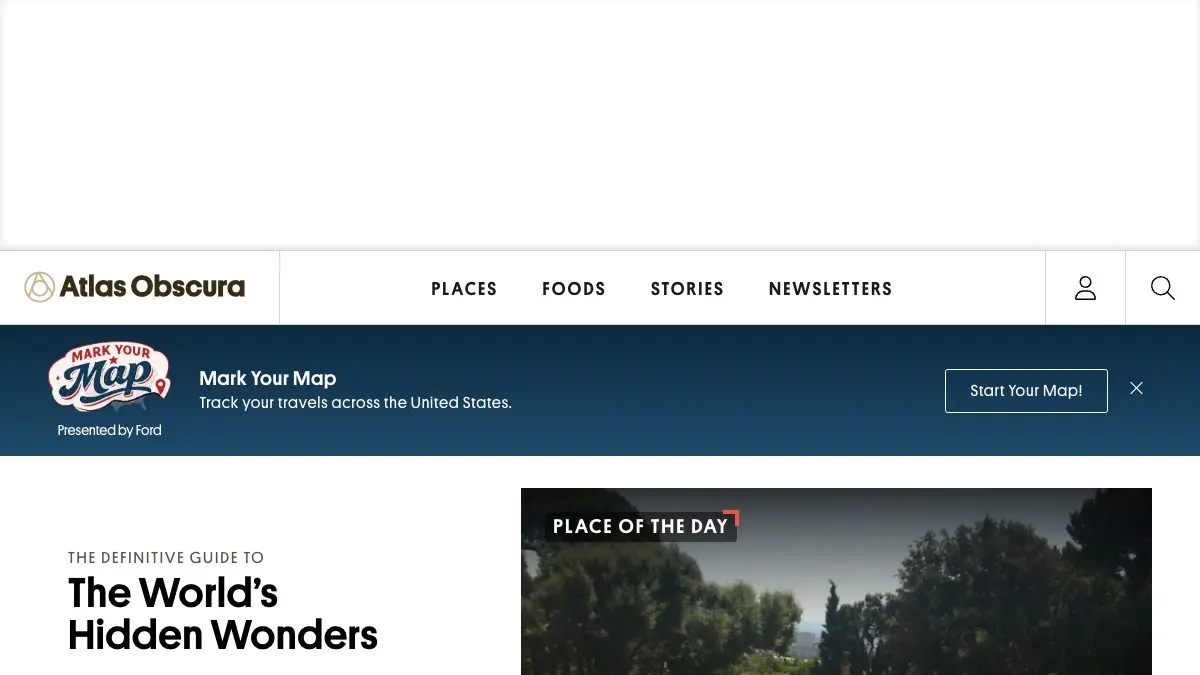
Atlas Obscura is a crowd-built map of everything strange on Earth. A chapel decorated with 40,000 human bones. A Soviet ekranoplan rusting on a Caspian beach. A door in a Roman wall that leads to a keyhole with a perfectly framed view of St Peter’s. It is all mapped, photographed and searchable, and browsing it is free.
You will open it to plan a trip. You will still be reading about Bulgarian concrete UFOs an hour later.
What is Atlas Obscura?
Founded in 2009 by Joshua Foer and Dylan Thuras, it began as an antidote to the guidebook top-ten list. The premise: the interesting things are not the cathedral everyone photographs, they are the museum of medieval torture instruments three streets behind it, and nobody was cataloging those.
So they let people submit them. Fifteen-plus years later Atlas Obscura holds tens of thousands of entries covering every continent, each with photos, a pin on the map and honest notes about whether you can actually get in. Alongside the atlas there is a steady stream of feature writing and Gastro Obscura, which does the same job for food, fermented shark, ancient noodle techniques, the last person who makes a particular cheese.
The editorial voice is the secret weapon. Curious, dry, never breathless. It treats a haunted mine and a very unusual pastry with exactly the same seriousness.
What can you do on Atlas Obscura?
- Search anywhere on Earth. Type a city and get a list of its oddities, from the famous-but-weird to a plaque nobody notices.
- Browse the map. Zoom around and let the pins do the work. Great for road trip planning, catastrophic for productivity.
- Use Nearby. It will show you the strange things within reach of wherever you currently are, which is how you discover your own town has something ridiculous in it.
- Hit Random Place. The best button on the site. One click, one improbable location, no context.
- Read Gastro Obscura. The food arm covers dishes, ingredients and traditions with the same appetite for the obscure.
- Save and track places. A free account lets you mark places as visited or wanted, so you end up with a personal atlas of weird things you have actually stood in front of.
- Read the features. Long articles on lost languages, cursed objects, historical hoaxes and the people keeping dying crafts alive.
Tips to get the most out of it
Always read the “Know Before You Go” box. It is at the bottom of every entry and it is where contributors put the truth: the place closed, the gate is locked on Sundays, you need to ask the neighbor for the key. This box saves entire wasted afternoons.
Search your own city first. Everyone assumes the atlas is for exotic travel. It is not. There is almost certainly something absurd within a bus ride of you that you have walked past for years.
Use Nearby while traveling, not before. Plans change. Standing in an unfamiliar neighborhood and asking what is odd around here produces much better detours than an itinerary written at home.
Follow the tags. Entries carry tags like “abandoned”, “mummies”, “hand-carved” or “one-of-a-kind”. Clicking a tag pivots you from one place to every place like it worldwide.
Check the submission date and photos. Entries age. If the pictures look like they came from 2013 and the notes mention a business that may have closed, a quick search before you travel is worth it.
Sort a city by distance from the center. Cheap trick, big payoff: the pins farthest out are usually the ones no tourist has ever bothered with.
If you like Atlas Obscura, also try…
- Native Land: a map of Indigenous territories, languages and treaties layered over the modern world.
- OldMapsOnline: historical maps of any place on Earth, showing how it used to be drawn.
- Random Street View: get dropped somewhere entirely arbitrary and see what is actually there.
- Window Swap: look out of a stranger’s window somewhere far away, for no reason at all.
The rest of our Maps & Exploration picks are equally bad for your schedule.
Frequently asked questions
What is Atlas Obscura?
Atlas Obscura is a collaborative online guide to the world's most unusual places, foods and phenomena. Contributors around the world submit entries for hidden, overlooked or genuinely bizarre destinations, each with photos, a location on the map and practical visiting notes. Alongside the atlas it publishes articles and a food section called Gastro Obscura.
Is Atlas Obscura free?
Yes, browsing the atlas and reading the articles is free, and a free account lets you save places and mark what you have visited. The company also sells books and runs paid guided trips and online courses, but none of that is required to use the site.
Who writes the entries on Atlas Obscura?
The atlas is largely user-contributed. Travelers, locals and enthusiasts submit places they have found, and the entries are reviewed and edited by staff before publication. That is why the collection includes so many small, strange sites that no conventional guidebook would ever cover.
Can I use Atlas Obscura to plan a trip?
It works well as a supplement to normal trip planning. Search a city or use the nearby view to see the odd sights within reach, save them to a list, and check the visiting notes for opening hours and access warnings. Because entries are user-submitted, it is worth verifying current access before traveling a long way.