// 2026-08-05 · Learning & Education · by Bob Smith
Read Something Interesting: One Button, One Genuinely Good Article
Read Something Interesting is one button that sends you to a random hand-picked blog post or essay. No feed, no algorithm, just one good thing to read.
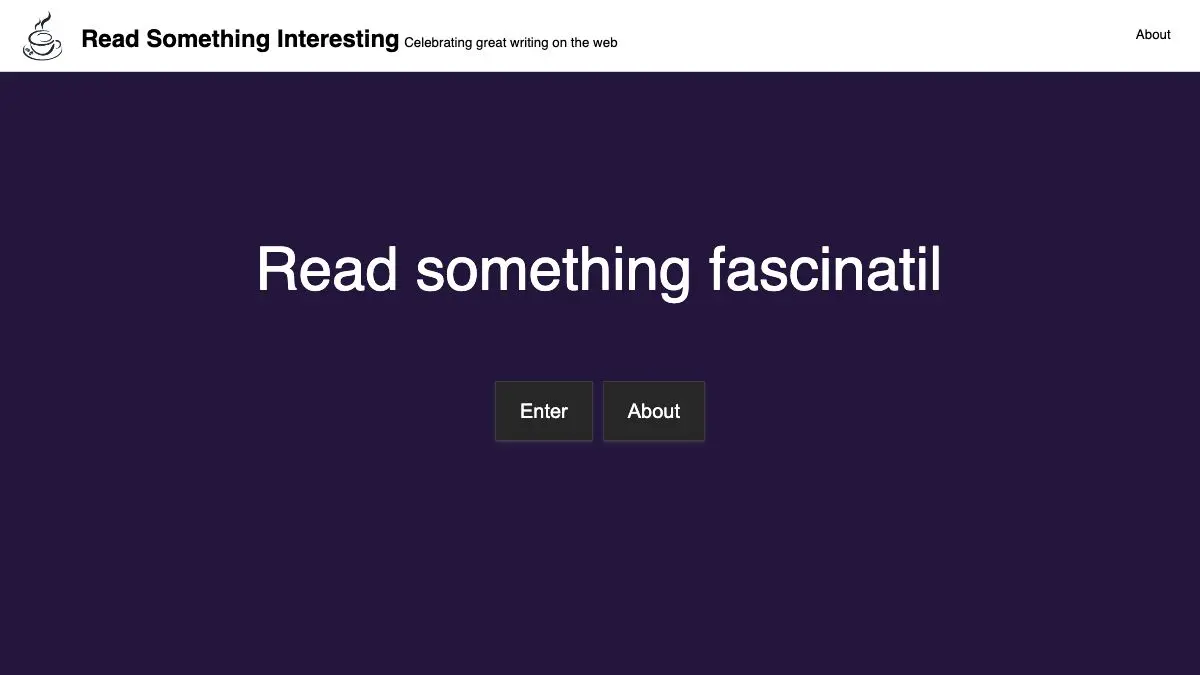
Read Something Interesting is a website with one button on it. You press the button and it sends you to an article that somebody decided was worth reading. That is the entire product, and it is a better reading experience than most of the multi-billion-dollar feeds competing for the same ten minutes of your attention.
What is Read Something Interesting?
The internet solved the problem of finding things to read by producing infinite things to read, which is not the same as solving it. Every feed you open is optimized to keep you scrolling rather than to hand you one good thing and let you leave. The outcome is familiar: twenty minutes of consumption and nothing you could describe to a friend afterward.
Read Something Interesting inverts that. It holds a curated pool of blog posts and essays, mostly from independent writers and personal sites rather than publications, and it gives you exactly one of them at a time. There is no ranking, no personalization, no history of what you clicked, and crucially nothing waiting underneath when you finish.
The curation is the whole value. A random-link button pointed at the open web is mostly a random-junk button. Pointed at a collection somebody actually vetted, it becomes something closer to a friend with good taste handing you a printout. The pieces tend to be evergreen, which means the site does not decay the way a news aggregator does.
What you get is a mixed bag by design: a technical postmortem, an essay about grief, a deep dive into some obscure industrial process, a person explaining what they learned running a small business. The unifying property is that someone found it interesting, which turns out to be a far better filter than recency or engagement.
The best part is the ending. You read the article and you are done. There is no next card, no recommended-for-you rail, no autoplay. Finishing is a valid outcome.
What can you do with Read Something Interesting?
- Press the button. That is the interface. One click, one article, out to somebody’s blog.
- Press it again. If the piece does not grab you in the first paragraph, reroll. There is no penalty and no algorithm sulking about your choices.
- Use it instead of opening a feed. Same reflex, same twenty seconds of boredom, dramatically better outcome.
- Discover independent blogs. Most results come from personal sites, so it doubles as a way to find writers to follow directly.
- Fill a queue. Open a few in tabs, save them to a read-later app, and you have an evening of reading with no doomscrolling attached.
- Give it to someone bored. It is the rare link you can send a person with no context and no setup required.
Tips to get the most out of it
Give each piece two paragraphs. Long-form writing from independent bloggers often takes a moment to find its footing. Two paragraphs is a fair trial, and a fast reroll is available if it fails.
Reroll shamelessly. The button costs nothing. Skipping five articles to find one that grips you is a completely reasonable use of the site, and there is nothing tracking your rejection rate.
Bookmark the writer, not the article. When something is great, the real prize is the blog it came from. Find the archive, subscribe to the feed, and you have gained something that keeps paying out.
Use it as a boredom substitute. The habit it replaces is opening a social app with no goal. Putting it on your phone’s home screen where that app used to be works surprisingly well.
Read it on a real screen when you can. A lot of these pieces are long, and long pieces reward a proper reading environment rather than three-inch columns at a bus stop.
Do not treat it as research. It is a serendipity engine, not a search tool. If you go in looking for something specific you will be annoyed, and the whole point is to be surprised.
If you like Read Something Interesting, also try…
- Arts & Letters Daily: three hand-picked links to serious essays every day, since long before feeds existed.
- Kagi Small Web: a stream of posts from genuinely independent personal websites.
- Wiby: a search engine and surprise button for the old, handmade, non-commercial web.
- MetaFilter: a community that has been posting best-of-the-web links, with actual discussion, for decades.
More things worth reading in Learning & Education, and more ways to wander in Weird & Wonderful.
Frequently asked questions
What is Read Something Interesting?
Read Something Interesting is a website with essentially one feature: a button that takes you to a random article from a curated collection of blog posts and essays. There is no feed, no personalization and no account. You press it, you get one thing to read, and if you do not like it you press it again.
Is Read Something Interesting free?
Yes, it is free to use and requires no signup. It simply links out to articles hosted on other people's sites, so whatever you land on is subject to that site's own access rules, though the collection leans heavily toward personal blogs that are open to read.
Where do the articles come from?
They come from a hand-assembled collection of independent blogs, personal sites and long-form essays rather than from major publications. The selection skews toward the sort of writing people share because it is interesting, not because it is timely, which is why the results rarely feel dated.
Is it like StumbleUpon?
It is the same idea narrowed to text. StumbleUpon sent you to random websites of every kind; this sends you to a single article that someone thought was worth reading. The result is calmer and more consistently rewarding, and it ends when you finish reading rather than continuing forever.
Visit Read Something Interesting →
← All posts · Browse the directory