// 2026-07-09 · Tools & Utilities · by Bob Smith
Kagi Small Web: Personal Blogs, No Algorithm
Kagi Small Web is a live feed of recent posts from independent blogs and personal sites, no ranking, no engagement bait, just humans writing on the open web.
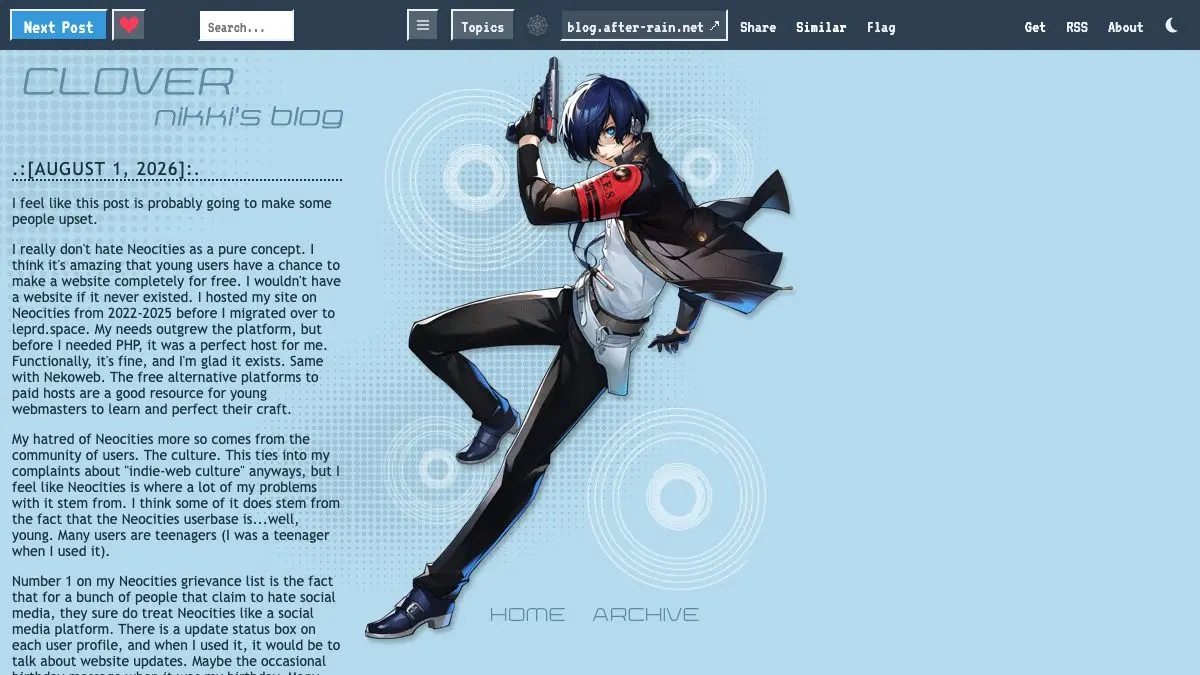
Kagi Small Web is a live feed of recent posts from independent blogs and personal websites, presented without ranking, recommendations, or engagement math. Someone wrote something on their own site this week; here it is. It is the calmest discovery tool on the internet and a genuine cure for feed fatigue.
What is Kagi Small Web?
The premise is a quiet act of rebellion. Every major feed you look at is sorted, by engagement, by recency-weighted popularity, by whatever keeps you scrolling. That sorting is why everything you read starts to feel the same.
Small Web does not sort. It collects recent posts from thousands of personal sites and shows them to you.
That is it. No upvotes. No follower counts. No “people also read.” A post from a blog with four readers sits next to one from a blog with forty thousand, and you cannot tell which is which until you click.
The source list is public and community-maintained, so the whole thing is auditable, you can see exactly which sites feed the stream, and suggest additions. It leans toward posts from roughly the last week, so the feed genuinely refreshes rather than recycling the same evergreen hits.
What you get is a strange, wonderful mix: someone’s notes on rebuilding a bicycle wheel, a working programmer thinking out loud about a bug, an essay about grief, a review of a fountain pen. Real people, writing because they wanted to.
What can you do on Kagi Small Web?
- Read the main feed. Recent posts from independent sites, refreshed as new writing appears.
- Hit “next post” repeatedly. The single-post view with a next button is the addictive mode. It is channel surfing for prose.
- Switch modes. Beyond blogs there are separate streams for videos, code, and comics: the same small-web philosophy applied to different media.
- Filter by category. Topic groupings across areas like tech and science, culture and creative work, and life and world let you narrow the firehose without narrowing it to one echo.
- Try the River view. An alternative layout for people who want the stream presented differently.
- Subscribe by RSS. Main feed and category feeds are available, with an OPML bundle for feed readers.
- Check the source list. It lives openly on GitHub. Browse it, submit sites, see what is included.
Tips to get the most out of it
Give it three clicks before you judge it. The first post you land on might be about a programming language you have never used. The fourth will be about beekeeping. The variance is the feature, do not bounce after one.
Use it as a browser homepage. This is the best trick. Replace whatever doom-feed you open by reflex with Small Web. Same reflex, radically better inputs, and it ends after a few posts instead of scrolling forever.
Subscribe to the ones that land. When a post is good, go to the blog’s homepage and grab its RSS feed. Small Web is a discovery layer, not a destination, the point is to leave with new subscriptions.
Try the category feeds when you want focus. The unfiltered stream is great for wandering. If you actually want to read about one area, the category RSS feeds are cleaner.
Nominate the blogs you love. The index grows through submissions. If your favorite writer’s personal site is not in there, put it in there.
If you like Kagi Small Web, also try…
- Wiby: the same small-web instinct pointed backward, indexing handmade pages instead of new posts.
- Cameron’s World: a collage built from the personal web of the 1990s, before platforms ate it.
- The Pudding: proof that independent publishing on the open web can also be spectacular.
- Internet Archive / Wayback Machine: the library keeping all of this from disappearing.
Browse more of the useful stuff in Tools & Utilities, or wander into Weird & Wonderful for the stranger corners.
Frequently asked questions
What is Kagi Small Web?
Kagi Small Web is a feed of recent posts pulled from thousands of independent blogs and personal websites. Instead of ranking content by popularity or engagement, it surfaces recent writing from small sites in roughly random order. The goal is to give visibility to individual humans publishing on the open web rather than to platforms.
Is Kagi Small Web free?
Yes. Small Web is free to browse and does not require a Kagi search subscription or an account. RSS feeds are available at no cost too, and the list of indexed sources is published openly.
Do I need a Kagi account to use Small Web?
No. You can open the page and start reading immediately without signing in. Kagi's paid search engine is a separate product, Small Web is available to anyone.
Can I get Small Web as an RSS feed?
Yes. Kagi offers RSS feeds for the main Small Web stream and for its category feeds, plus an OPML file you can import into a feed reader. That makes it easy to fold independent blog discovery into whatever reading app you already use.