// 2026-08-05 · Music & Audio · by Bob Smith
Conserve the Sound: An Audio Museum of Things That Don't Exist Anymore
Conserve the Sound is an online museum preserving the noises of obsolete objects: rotary phones, typewriters, film projectors and the dial-up modem handshake.
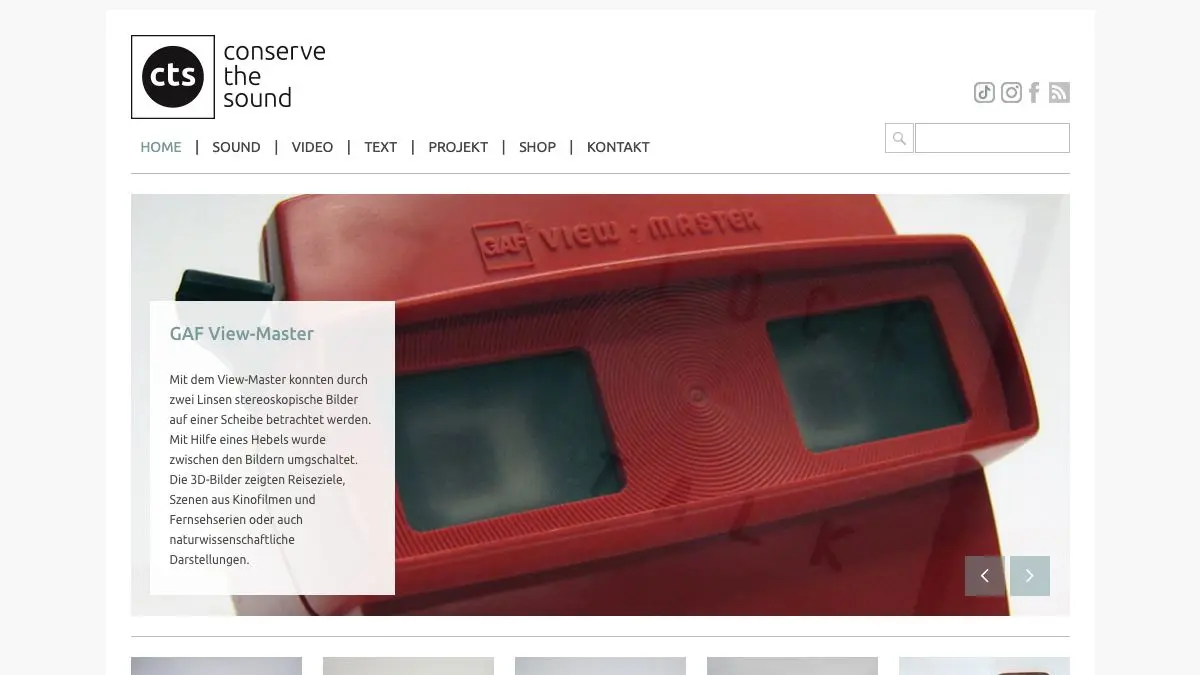
Conserve the Sound is a museum where nothing is on display, because the exhibits are noises. The dial tone of a rotary telephone. A Super 8 projector threading up. The specific mechanical thunk of a car window being wound down by hand. Each one recorded properly, photographed against clean white, and filed away before the last working example stops working. It sounds like a small idea and it is quietly devastating.
What is Conserve the Sound?
Objects disappear and we notice. Sounds disappear and we mostly do not, until one day you hear a recording of a modem handshake and an entire decade arrives uninvited.
Conserve the Sound is a German project built on exactly that observation. Its makers set out to record the sounds of vanishing everyday technology, the machines that filled offices and living rooms until they were replaced by things that make no noise at all. A smartphone can do the work of a typewriter, a camera, a telephone, a projector, a stopwatch, and a filing cabinet, and it does all of it in silence.
The presentation is what elevates it. Every entry is treated like a museum object: a clean photograph of the item, a careful recording of it in operation, a short note about what it is. There is no nostalgia soundtrack, no vintage filter, no attempt to make you feel anything. The restraint does the work.
Alongside the object recordings the project has gathered interview material, people talking about sound, memory, and what it means to lose an everyday noise. That side of the site turns a catalog into an argument: that the sonic environment is part of cultural history, and that nobody was keeping it.
Practically, the site is a browsing experience rather than a download library. You navigate the collection, click an object, listen. It is bilingual, German and English. There is no account, no paywall, and no attempt to sell you a sample pack. If you want to use a recording in published work, ask, because a museum collection is not the same thing as a stock library.
The best way to use it is undirected. Open it, click on something you owned once, and see how much detail comes back.
What can you do with Conserve the Sound?
- Browse the collection by object. Every entry is a photograph plus a recording, so you can wander visually and listen to whatever looks familiar.
- Hear technology you had forgotten had a sound. Slide projectors, mechanical calculators, film advance levers, the click of a light switch that predates the current one.
- Play the dial-up handshake. Almost nobody under thirty has heard it live and almost nobody over forty has forgotten it.
- Compare variants. Several categories hold multiple models of the same kind of device, which reveals how much sound design was accidental engineering.
- Read and watch the interview material. The project pairs its recordings with people talking about sound and memory.
- Switch languages. The site runs in German and English, which is worth toggling if you like seeing how object names translate.
- Use it as a memory prompt. Playing this to an older relative is a more effective conversation starter than any photograph.
Tips to get the most out of it
Use headphones. These are close-miked recordings of small mechanical details. Laptop speakers throw away exactly the part that makes them uncanny, the tiny click before the main sound.
Start with something you owned. The collection works best when it hits something personal. Find your family’s telephone, your school’s projector, your first cassette player, and go from there.
Pay attention to the photographs. They are not decoration. Seeing the object while hearing it is the whole design of the site, and it is why this lands harder than a folder of audio files ever could.
Let it run in the background of a conversation. Play a few entries with someone who grew up in the same decade and watch the associations arrive faster than either of you can articulate them.
Do not treat it as a sample pack. It is a preservation project. If you want to use something publicly, contact the makers. For freely reusable effects, go to the BBC archive instead.
Notice what is missing from your own life. The most interesting reaction the site produces is prospective: what in your house right now still makes a noise that will be gone in twenty years?
If you like Conserve the Sound, also try…
- BBC Sound Effects Archive: 16,000 recordings from the BBC’s own archive, downloadable for personal and educational use.
- My90sTV: the same nostalgia mechanism, applied to an evening of television.
- Webamp: a working Winamp in your browser, complete with the interface sounds of the era.
- Internet Archive / Wayback Machine: the largest ongoing effort to keep the things nobody thought to save.
Keep listening in Music & Audio, or wander into the more peculiar corners of Weird & Wonderful.
Frequently asked questions
What is Conserve the Sound?
Conserve the Sound is an online museum of vanishing and vanished sounds, built around objects that have fallen out of everyday use. Each entry pairs a clean studio recording of the object with a photograph of it and a short description. The project comes from Germany and the site is available in both German and English.
Is Conserve the Sound free?
Yes, the museum is free to browse and listen to, with no account required. It is a cultural preservation project rather than a stock audio library. If you want to use a recording in your own work, contact the project rather than assuming a blanket licence.
What kinds of sounds are in the collection?
Mostly everyday technology that has been replaced: rotary telephones, mechanical typewriters, slide and film projectors, cassette decks, dial-up modems, film cameras, kitchen appliances and office equipment. The emphasis is on objects whose sound was once completely ordinary and is now almost unrecoverable. New entries have been added over the life of the project.
Can I use these sounds in a video or a game?
The recordings are presented as a museum collection, not as royalty-free assets, so the safe approach is to ask the project directly about permission for any published work. For freely downloadable effects intended for personal, educational and research reuse, the BBC Sound Effects Archive is a better starting point.